(2)-The End of the Edwin Drood Mystery
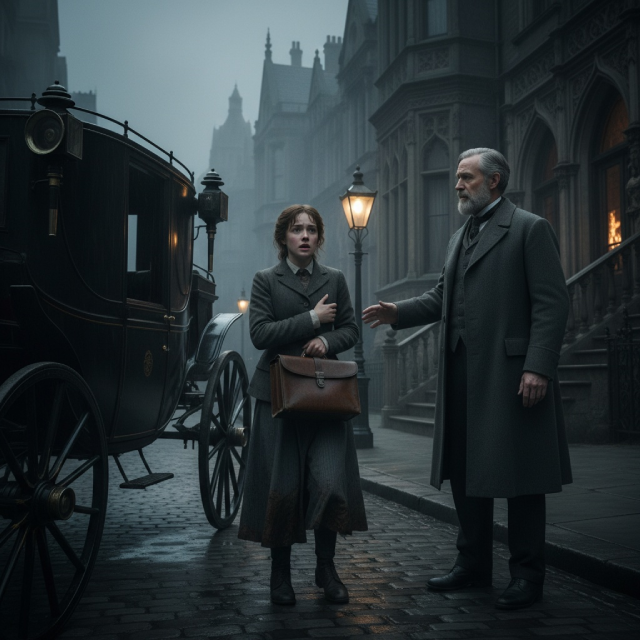
This ending respects Dickens's penchant for hidden identities (Oliver Twist, Great Expectations) and his interest in moral redemption.
Several months after Edwin's disappearance, Cloisterham is still steeped in an atmosphere of suspicion and unresolved grief. Jasper continues his duties, but something within him has hardened. He pressures Rosa to marry him, his love veering into tyrannical obsession. The terrified young woman seeks refuge with Grewgious in London, and Jasper, sensing his prey slipping away, becomes increasingly reckless. Dick Datchery, for his part, has amassed enough evidence to trigger the final act of this drama. One evening, he summons several key figures to Grewgious's drawing room: Reverend Crisparkle, Helena Landless, the inspector from London, and Jasper himself, drawn there under some pretext.
It is then that Datchery reveals his true identity. Tearing off his false wig and beard, he unveils the face... of Edwin Drood himself.
The silence that follows this revelation is deafening. Jasper, pale as death, staggered backward, his hands gripping the back of a chair to keep from collapsing.
Edwin then explained what had really happened that Christmas night. A few hours before the fateful dinner, he and Rosa had shared their decision to break off their engagement to Mr. Grewgious. The lawyer, sensing the danger Jasper represented, had given Edwin a family ring intended for Rosa—but warned him to keep it on him, like a talisman. That evening, during dinner, Edwin had drunk the wine Jasper had poured for him. Drugged wine. He had felt his limbs go numb, his vision blur. But contrary to Jasper's hopes, the young man hadn't lost consciousness. In a flash of terrified lucidity, he had understood: his uncle wanted to kill him.
Feigning complete unconsciousness, Edwin had allowed himself to be manipulated, feeling Jasper's hands around his neck—but not long enough to truly strangle him. Jasper, believing his victim dead or dying, had dragged him to the cathedral to hide the body in the crypt. On the way, Edwin had deliberately dropped his watch and pin near the Weir to direct suspicion toward drowning. Once in the crypt, he waited for Jasper, panicked and in a hurry, to place him in a dark corner before fleeing. Regaining his senses, Edwin then made a bold choice: to truly disappear. Why? Because he understood that only his "death" would reveal Jasper's true nature. Alive, he would remain an obstacle; dead, he would become a trap. With the discreet help of Grewgious (whom he had contacted the very next day), he had left Cloisterham, disguised himself, and returned under the identity of Datchery to spy on his uncle and gather evidence. Jasper, now cornered, makes one last attempt to deny everything. But Edwin produces the ring—the very ring Rosa should have been wearing, but which had remained in Edwin's pocket that night. He had kept it carefully, knowing it would prove the engagement was broken and that Jasper therefore had no rational reason to hate him... other than pure jealousy and criminal lust. The inspector then orders a thorough search of the cathedral. In the crypt, hidden beneath stones and quicklime that Jasper had prepared but hadn't had time to use completely, they discover torn clothes belonging to Edwin, signs of a struggle, and most importantly—in a notebook hidden in Jasper's lectern—obsessive sketches of Rosa, feverish notes describing the planned murder, and even entire passages copied from treatises on poisons and narcotics.
Jasper, his mask finally torn away, collapses. But it isn't remorse that breaks him—it's the rage of having failed. He is arrested, convicted, and his descent into madness accelerates in prison, where he sinks completely into the opium-laced haze of his hallucinations.
Epilogue: "Light Restored"
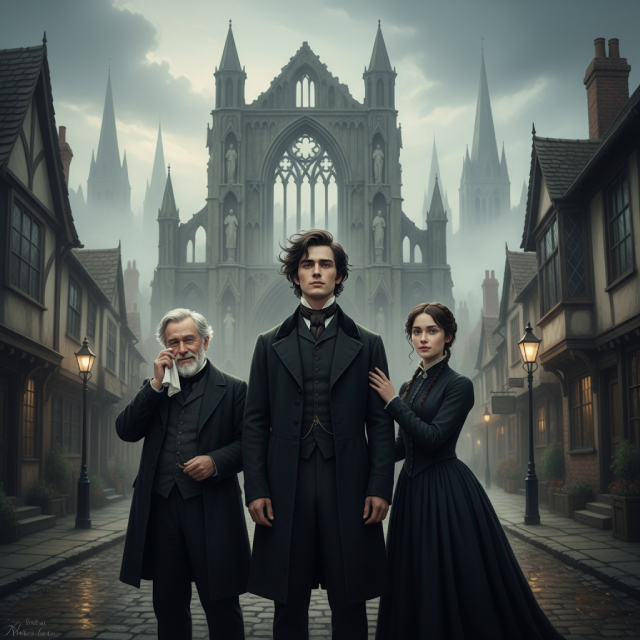
Neville Landless, publicly exonerated, can finally hold his head high. Reverend Crisparkle, who had never stopped believing in him, sheds tears of joy. Helena, his fierce sister, finds peace when she sees her twin freed from suspicion.
Edwin, for his part, has changed. This ordeal has matured him, stripped him of his youthful recklessness. He is no longer the frivolous young man who went off to the colonies out of a sense of duty. He has faced death and chosen life—not for himself, but to protect those he loved. Rosa, freed from Jasper's terror, can finally breathe. A new affection blossoms between her and Edwin—deeper, more genuine than the obligation of their past engagement. Perhaps, with time, something gentler will flourish. Or perhaps they will simply remain dear friends, each free to choose their own path. Dickens, after all, always preferred nuanced redemptions to easy happy endings. Mr. Grewgious, that gruff old bear, will never admit aloud that he played the role of benevolent puppeteer in this affair. But that evening, alone in his London study, he raised his glass of port to the portrait of Rosa's mother and murmured, "I have kept my promise."
And Cloisterham, slowly, resumed its tranquil course. The cathedral continued to ring its bells, but now a lighter sound resonated between its stones. Secrets were revealed, masks were dropped, and light—that light which Dickens always shone at the end of his darkest stories—finally illuminated the shadows of this Gothic city.
For such was Dickens's genius: to show that even in the darkest recesses of the human soul, even in the face of manipulation, obsession, and murder, hope and justice can triumph—not through magic, but through the courage, cunning, and solidarity of those who refuse to give up.



