Lucia Valenti’s Revenge
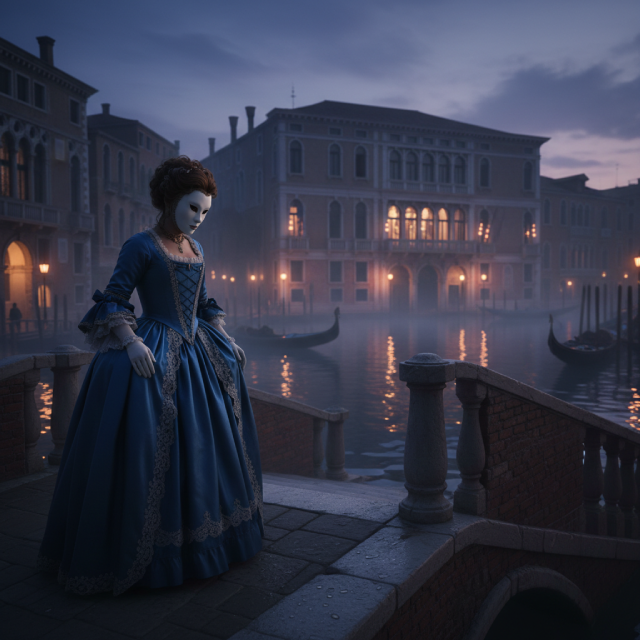
Lucia Valenti was born to inherit an empire. Instead, she was left with nothing. When her brother Lorenzo forged their father’s will, he didn’t just steal her fortune— casting her into the gutters of Venice–, he stole her soul. For three years, Lucia has survived the shadows, fueled by a singular, burning purpose: to watch Lorenzo lose everything. The only thing more dangerous than a man with a secret is a woman with nothing left to lose. But revenge, even successful revenge, comes at a price.
The Widow's Debt
The cellar was a damp, lightless cavity that smelled of river silt and rot. It was a space designed for things meant to stay hidden, tucked away beneath the bustling streets of the Rialto where the world traded in gold and spices. Here, the air was thick, clinging to the skin like a wet shroud. Lucia Valenti sat at a scarred wooden table, her eyes fixed on the ledger spread before her. A single tallow candle flickered between her and Cariello Rossi, casting long, dancing shadows against the weeping stone walls. The flame was small, but it was enough to illuminate the work of three years. To anyone else, the papers were merely records of commerce. To Lucia, they were the blueprints of a demolition.
She traced the edge of a family map, her finger lingering over the outlines of the Valenti estate. Three years ago, she had been cast out of that house with nothing but the clothes on her back and a heart full of glass. Lorenzo, her brother, had not merely stolen her inheritance; he had attempted to erase her existence. He had forged their father’s will with a clumsy hand that the law chose not to question, turning her into a ghost before she was even dead. But ghosts had the advantage of being invisible. Lucia looked at her hands. They were no longer the soft, pale hands of a merchant’s daughter who spent her afternoons embroidering silk. They were steady and stained with the ink of a thousand practiced forgeries.
Cariello leaned forward, the scar over his eyebrow catching the yellow candlelight. He was a man of quiet movements, a shadow that had taught her how to breathe in the dark. He tapped a heavy folder of papers resting near the ledger. He spoke in a low, gravelly voice: "The ink is dry. The seals are perfect. Even the wax has the right scent of aged cedar. If he looks at these, he won’t see a lie. He’ll see his own grave."
"He won’t just look at them," Lucia said. Her voice was precise, a low-pitched instrument that had forgotten how to tremble. "He will feel them. Lorenzo has always been a man who fears the things he cannot see. I am going to give him something very specific to be afraid of."
She stood, smoothing the heavy, dark fabric of her dress. She had chosen the attire of a mourning widow—plain, severe, and utterly unremarkable. It was a costume that commanded a certain respectful distance, allowing her to move through the city like a smudge of soot. She pinned a black veil to her hair, obscuring the sharp, aristocratic lines of her face. The amber of her eyes remained visible, but they were now the eyes of a woman who had seen too much grief to be questioned. She looked at Cariello one last time. He gave a short, sharp nod. The plan was in motion. There was no room for hesitation, only the cold, calculated execution of a debt that had been accruing interest for a thousand days.
The walk to the Valenti counting house was a journey through a past life. Every bridge and every alleyway held a memory of a girl who no longer existed. The counting house stood as the heart of her father’s stolen empire, a grand stone building overlooking the canal. It was a place of frantic energy, where clerks scurried with quills and ledgers, and the scent of expensive tobacco hung in the air. Lucia stepped through the heavy oak doors, her boots clicking softly on the marble floor. She felt a momentary surge of ice in her veins, but she pushed it down. She was not Lucia Valenti today. She was the widow of a humble clerk, come to settle a final, terrible business.
The head bookkeeper was a thin man with spectacles perched precariously on his nose. He looked up from his desk with a flicker of annoyance that softened into professional sympathy when he saw her black veil. Lucia did not speak more than was necessary. She handed him the folder, her movements measured. "My husband kept these in his private chest," she whispered, her voice tight with a feigned tremor. "He said they were the most important papers in Venice. He said the Signor Valenti would know what they meant."
The bookkeeper opened the folder, his eyes scanning the first page. He paled slightly. The documents were masterpieces of deception. They detailed a massive, secret debt owed by Lorenzo to a powerful and notoriously violent banker in Rome—a man who did not use courts to settle his accounts. To make the lie undeniable, Lucia had used a secret family seal, a private signet her father had used for his most sensitive dealings. It was a seal Lorenzo would recognize instantly, one he believed only he possessed. The bookkeeper didn't wait. He rose from his stool and hurried toward the inner office, the heavy folder clutched against his chest like a shield.
Lucia retreated to the shadows of the lobby, standing near a pillar where the light was dim. She waited. The door to the inner office was not fully latched, leaving a thin, jagged crack through which she could observe the theater of her making. Inside, she saw Lorenzo. He was dressed in a waistcoat of garish crimson velvet, his powdered hair slightly askew. He looked softer than she remembered, his face bloated by wine and the easy life he had bought with her blood. He snatched the folder from the bookkeeper’s hand, his expression one of bored arrogance. That arrogance lasted exactly four seconds.
As he read, the color drained from his face, leaving it a sickly, translucent shade of white. His hands began to shake, the papers rustling like dry leaves in a storm. He reached the page with the secret seal, and his breath hitched in a ragged, audible gasp. The panic was instantaneous. It was a physical thing that seized his throat. He looked around the room as if the walls were closing in, his small, restless eyes darting toward the corners where the shadows lay thickest. He was already a man drowning in debt, struggling to maintain a facade of wealth, and this—this forged catastrophe—was the weight that would pull him under.
"Lies!" Lorenzo suddenly screamed, his voice cracking with a frantic speed. "This is impossible! Who brought this? Where is the messenger?" He turned on the bookkeeper, his face contorting into a mask of desperate rage. He seized a heavy mahogany chair and threw it across the room. It shattered against the wall with a deafening crack, a violent outburst born of pure, unadulterated terror. The clerks in the outer office froze, their quills hovering over their ledgers like startled birds.
Lucia watched him from the shadows. She felt a cold, sharp joy bloom in her chest, a sensation so piercing it almost hurt. It was the first breath of real air she had taken in three years. She did not wait for him to storm out of the office. She turned and walked out of the counting house, her pace steady and calm. She did not look back. The chaos she had left behind was only the beginning. The seed of doubt had been planted in a mind already fertile with paranoia.
She met Cariello at a small stone bridge a few streets away. The sun was beginning to dip toward the horizon, staining the canal water the color of bruised plums. Cariello was leaning against the railing, watching the gondolas pass. He didn't need to ask how it went; he could see the change in her posture, the way the rigidity of her shoulders had shifted from a burden to a weapon. He straightened as she approached, his eyes searching hers through the thin veil.
"He broke a chair," Lucia said simply. Her voice was devoid of emotion, but there was a hard light in her amber eyes that had not been there that morning.
"A good start," Cariello replied, a grim smile touching his lips. "The bookkeeper will talk. The servants will whisper. By tomorrow, the Rialto will know that Lorenzo Valenti is looking at a shadow he can't outrun. The first trap is set, Lucia. The city is starting to listen for the sound of him falling."
Lucia looked down at the dark water of the canal. She thought of the cold stones of the cellar and the three years of silence she had endured. The debt was far from paid, but for the first time, the balance was shifting. "Let them whisper," she said. "I want the whole of Venice to hear when he finally hits the ground."
The Golden Trap
The salt air of the Venetian docks was thick with the scent of tar and rotting wood. It was a cold, biting mist that clung to the lungs, much like the frost on the Emperor’s windows in a distant, dying palace. Lucia Valenti stood in the shadow of a limestone warehouse, her dark cloak blending into the damp masonry. Beside her, Cariello Rossi checked the weight of a heavy purse filled with silver coin. The moon was a sliver of bone in the sky, providing just enough light to see the silhouettes of the massive merchant vessels swaying in the tide. One of those ships, the Seraphina, carried the weight of Lorenzo’s future in its hull—bales of the finest Eastern silk that were meant to be his salvation.
Cariello moved with the practiced silence of a man who had spent years navigating the city’s underside. He stepped toward the harbormaster’s hut, where a flickering oil lamp cast a sickly yellow glow against the fog. Lucia watched him from the darkness. She saw the exchange: the hushed words, the heavy purse sliding across a scarred wooden table, and the quick, furtive nod of a man whose loyalty was as liquid as the water in the canals. The dock workers were next. They were men of salt and muscle, easily swayed by the promise of gold and the absence of questions. Under the cover of the midnight mist, the Seraphina did not dock at the Valenti pier. Instead, it was towed silently toward a private, unmarked warehouse at the edge of the Giudecca, disappearing into the black maw of the city’s secret channels.
When the sun rose, it did not bring light to Lorenzo Valenti’s world; it brought a cold, hollow clarity. Lucia watched from a distance, perched on the balcony of a nearby coffee house, her face hidden behind a simple lace fan. She saw her brother arrive at the docks, his gait hurried and his expensive velvet coat flapping in the morning breeze. He looked frantic, his small, restless eyes scanning the empty moorings where his fortune should have been anchored. He shouted at the laborers, his voice high and thin, cracking with a desperate arrogance. He clutched at the harbormaster’s sleeve, but the man merely shrugged, pointing to empty ledgers and vacant water. Lorenzo was a man who had built his life on a foundation of stolen sand, and the tide had finally come in. He was broke. Every creditor in Venice would be at his door by noon, and he had nothing left to offer them but excuses.
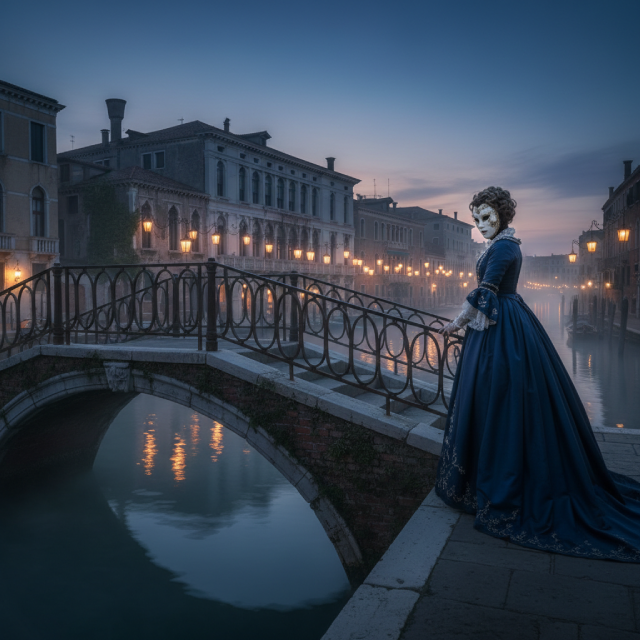
The evening brought a different kind of theater. The Valenti Palace, once Lucia’s home, was ablaze with a thousand candles for the masquerade ball. The windows were frosted with the breath of hundreds of courtiers, and the music of violins spilled out into the cold night air. Lucia arrived late, stepping out of a gondola like a vision of silver and shadow. She wore a gown of midnight-blue silk, its hem dusting the marble steps, and a shimmering silver mask that covered the sharp, aristocratic lines of her face. She was no longer the mourning widow or the dispossessed daughter. She was a woman of mystery, a wealthy traveler from Rome with gold to spend and secrets to keep.
Inside the ballroom, the air was cloying with the smell of expensive perfumes and roasted meats. She spotted Lorenzo immediately. He was near the wine fountain, his powdered wig lopsided and his face flushed a dark, unhealthy crimson. He was drinking far too much, his hands shaking as he raised the crystal glass to his lips. He was trying to hide his terror behind a mask of indulgence, but the way he flinched at every loud laugh betrayed him. He was a cornered animal, looking for a way out of a room that had no doors.
Lucia moved through the crowd, her posture rigid and commanding. She approached him slowly, the silver of her mask catching the candlelight. "You look like a man who is carrying the weight of the world on his shoulders, Signor Valenti," she said. Her voice was low and calm, a measured cadence that held no trace of the sister he had discarded. She used a slight Roman lilt, a melodic deception that kept her identity buried beneath the surface.
Lorenzo turned, his eyes bloodshot and watery. He looked at her with a mix of suspicion and a pathetic, grasping hope. "The world is a heavy place," he slurred, trying to reclaim some of his lost dignity. "But I am a man of substance. Business is merely... complicated at the moment."
"I have heard the whispers on the Rialto," Lucia continued, her amber eyes steady behind the silver lace. "They say the Valenti name is under a shadow. It would be a shame for such a legacy to vanish because of a temporary lack of liquidity. I am in Venice to diversify my family’s interests. I find I have a surplus of gold and a desire for stable investments."
Lorenzo leaned in, the scent of sour wine heavy on his breath. The mention of gold was a hook, and he took it without hesitation. He did not ask who she was or where her fortune came from. He was too scared of the abyss opening beneath his feet to care about the identity of the person offering him a hand. "A loan?" he whispered, his voice cracking. "You would offer a private arrangement? To save the Valenti looms?"
"To save your name," Lucia corrected him. "I find that reputation is the only currency that truly matters. I have the papers drawn. A simple contract. We can meet in the morning to finalize the details, or perhaps... in a more private setting tonight?"
Lorenzo let out a ragged breath, a sound of pure, unadulterated relief. He thought he was being saved by a kind stranger, a wealthy patron who had appeared from the mists to pull him back from the brink of ruin. He began to laugh, a loud, boastful sound that drew the eyes of the nearby guests. "I knew my luck would turn! I am the master of this house, and the heavens know it!" He grabbed a fresh glass of wine, his movements frantic and erratic. "Come, let us step into the gallery. The noise here is... distracting."
They walked away from the dancers, moving into the quiet, dim hallway lined with portraits of Valenti ancestors. Lorenzo’s arrogance returned as the wine fueled his delusions. He felt invincible again. He leaned against a marble bust of their father, his face contorting into a sneer of triumph. "You know," he whispered, leaning closer to Lucia’s mask, "everyone thought I was a fool. Even my father. He wanted to give everything to my sister. Can you imagine? A woman running a silk empire."
Lucia felt a cold, sharp stone settle in her chest. "And where is your sister now?" she asked, her voice a whisper of ice.
Lorenzo chuckled, a wet, rattling sound. "Dead in the gutter, I expect. I made sure of it. But the old man... he wouldn't listen. He kept the true ledgers hidden. He was going to sign the estate over to her the very night he died." He looked around the empty hall, his eyes wide and vacant. "I had to do it. I put the pillow over his face and watched the light go out of his eyes. It was quick. A mercy, really. He died thinking he was a success, and I became the master."
The confession hung in the air, a dark and heavy thing. Lucia did not move. She did not tremble. The silver mask hid the flash of absolute, murderous clarity that ignited in her amber eyes. The debt was no longer just about silk and gold; it was about blood. She reached into her silk reticule and pulled out a folded parchment—the loan contract. It was a masterpiece of legal deception. In the dim light, the small print at the bottom was nearly invisible, but its terms were absolute. It was not a loan; it was a deed transfer for every loom and warehouse the Valenti family owned.
"You’ll sign it," she said, her voice devoid of any warmth. "and the gold will be in your counting house by dawn."
Lorenzo shook with a mix of intoxication and greed. a triumphant grin on his soft, bloated face. "The Valenti name is saved."
"No," Lucia said, her voice returning to its true, precise cadence. "The Valenti name is finally being returned to its rightful owner."
She turned and walked back toward the ballroom, leaving him standing in the shadows of the gallery. The music was reaching a crescendo, but all she could hear was the sound of the trap snapping shut. The ship was gone, the money was spent, and the house was no longer his. Lorenzo Valenti was a ghost in his own palace, and he didn't even know he was dead yet.
The Final Reckoning
The air in the Valenti study was stagnant, smelling of old parchment and the sour, lingering odor of cheap wine. Dust motes danced in the single shaft of moonlight that pierced through the heavy velvet curtains. Lucia stood in the doorway, her presence as silent as the shadows. The room was exactly as she remembered it, though the prestige it once held had been stripped away by years of Lorenzo’s neglect. Her father’s desk, a massive piece of carved oak, was now buried under a mountain of disorganized ledgers and stained glasswork.
Lorenzo sat behind the desk. He looked like a man who had been dragged through the gutters of the Cannaregio. His powdered wig was missing, revealing the thin, sandy hair that clung to his damp scalp. His eyes were bloodshot, darting frantically toward the door as she entered. In his hand, he clutched a silver pen, his fingers trembling so violently that the nib scratched rhythmically against the desktop. He looked decades older than he had at the masquerade ball only hours before. The arrogance had been replaced by a hollow, rattling desperation.
“You came,” Lorenzo whispered. His voice was a thin rasp, devoid of its usual boastful volume. “The documents. You have the gold?”
Lucia did not speak. she stepped forward, the heels of her boots clicking sharply against the marble floor. She placed the leather-bound folder on the desk. Inside was the loan contract she had prepared—a masterwork of legal traps and hidden clauses. Lorenzo did not even reach for the candle to illuminate the text. He did not squint at the fine print crowded at the bottom of the page. He grabbed the pen and scribbled his name with a frantic, jagged motion. He wanted the salvation he thought the ink provided. He wanted the nightmare of his debts to vanish with a single stroke.
The ink was still wet when Lucia reached out and took the paper. She moved slowly, deliberately. She reached up and unpinned the silver mask, letting it fall to the desk with a heavy thud. Then, she pulled back the dark veil of her hood. She leaned into the light of the single flickering candle, allowing the amber of her eyes to catch the flame.
Lorenzo’s breath hitched. He made a sound that was half-sob, half-choke. He recoiled so sharply that his chair skidded back, hitting the bookshelf with a crash. His face went the color of curdled milk. “No,” he gasped, his hands clawing at the edge of the desk. “You. You are a ghost. A demon from the pits.”
“I am no ghost, Lorenzo,” Lucia said. Her voice was precise, every word hitting like a hammer on a nail. “I am the daughter of the man you murdered. I am the sister you cast into the streets to starve. I am the owner of everything you see.”
She reached into her cloak and pulled out a second set of ledgers—the real ones. She tossed them onto the desk, the heavy bindings thumping against the wood. “These are the true records of the Valenti silk trade. Not the fabrications you used to hide your gambling debts and your failures. This contract you just signed? It is not a loan. It is a full confession of debt and a transfer of all remaining assets. I own your looms. I own this house. I own the clothes on your back. You have nothing left but the air in your lungs, and I intend to take that, too.”
Lorenzo stared at the ledgers, then back at her. His mouth worked, but no sound came out for a long moment. Then, a low, wet chuckle began to bubble in his throat. It grew into a loud, terrifying laugh that echoed off the high ceilings of the study. He leaned forward, his eyes wide and vacant, shining with a sudden, manic light. “You think you won, Lucia? You think you are the only one who knows how to play this game?”
He stood up, swaying on his feet. He looked at her with a sneer that was more a baring of teeth. “I knew someone was hunting me. I felt the breath on my neck for weeks. I didn’t know it was you—I thought you were rotting in a potter’s field—but I knew a predator was circling. You think I spent the last month only drinking? I was preparing. I sold the naval maps of the Venetian lagoon to the agents of the Habsburgs. I sold the secrets of the Republic’s defenses to pay the men who kept me in wine.”
Lucia felt a cold trickle of dread settle in her stomach. “Treason, Lorenzo? You would burn the city to save yourself?”
“I did more than that,” Lorenzo hissed, leaning over the desk until his face was inches from hers. “I signed the treasonous correspondence with your new name. The wealthy lady from Rome. The one who has been moving gold through the shadows. I made sure the evidence points directly to your door. You wanted the Valenti legacy? You can have the gallows that come with it.”
As if on cue, a violent, rhythmic thudding erupted from the ground floor. It was the sound of a heavy ram hitting the reinforced oak of the front door. Shouts rose from the street—harsh, authoritative voices calling for the arrest of the Roman conspirator. The orange glow of torches flickered against the study windows, casting long, distorted shadows of the iron grates across the walls. The city watch had arrived.
“They are here for you, sister,” Lorenzo laughed, the sound breaking into a cough. “The Council of Ten does not show mercy to spies. You’ll be in the Piombi by morning, and executed in the square by noon.”
Lucia stood frozen for a heartbeat. The trap had shifted. She had been so focused on the financial ruin of her brother that she had underestimated the depths of his cowardice. He was willing to destroy Venice itself just to ensure she went down with him. The sound of splintering wood echoed from below. The front door had given way.
Cariello Rossi appeared in the doorway of the study, his face grim and his hand resting on the hilt of a concealed dagger. He didn't look at Lorenzo. His eyes were fixed on Lucia. “The watch is in the foyer,” he said, his voice a low growl of urgency. “There are twenty of them. We can’t fight our way out.”
“She’s yours!” Lorenzo screamed toward the hallway. “The spy is in here! Come and take the bitch!”
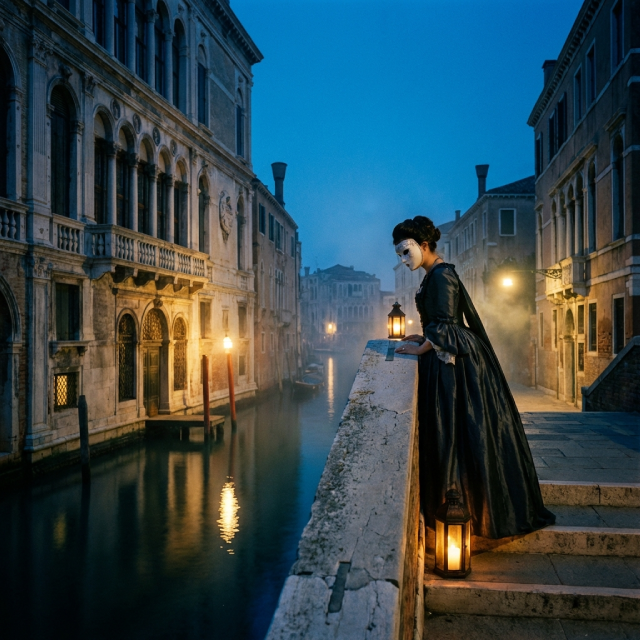
Cariello moved with a speed that belied his age. He grabbed Lucia by the arm, his grip like a vice. He ignored Lorenzo’s screeching and pulled her toward the balcony that overlooked the Grand Canal. The air outside was freezing, the mist rising from the water like a shroud. Below, the dark water of the canal slapped against the stone foundations of the palace.
“The contract,” Cariello muttered, nodding toward the paper Lucia still held. “It’s a confession. If you die with it, he wins. If you live, he hangs. We have to go. Now.”
Lucia looked back at the study. Lorenzo was slumped against the desk, a broken, laughing ruin of a man who had traded his soul for a few more hours of spite. The heavy boots of the guards were pounding up the stairs. The light of their torches was already spilling into the hallway, turning the air the color of blood.
“Jump,” Cariello commanded, pointing to the dark, churning water below. “It’s the only way.”
Lucia tucked the contract into her bodice, the parchment cold against her skin. She looked at the brother she had once loved, then at the man who had helped her reclaim her life. The revenge she had sought was no longer a simple matter of gold. It was a race for survival. She stepped onto the stone railing, the wind catching her hair, and let herself fall into the black embrace of the canal just as the doors to the study burst open. The last thing she heard was the sound of her own name being shouted as a curse into the Venetian night.
The end



